























Global Program for the Development of Secondary Cities
Context and Rationale
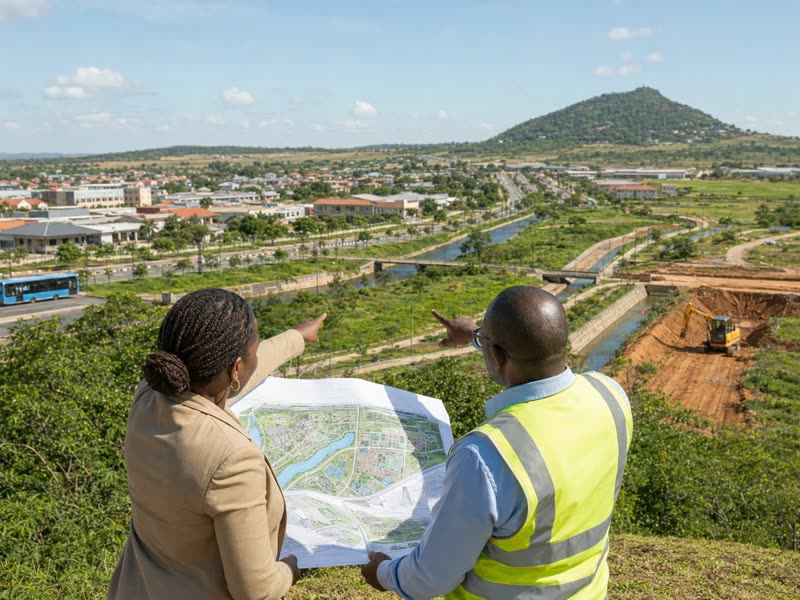
The world is undergoing rapid and irreversible urbanisation that is profoundly transforming economic, social, and environmental balances. By 2050, nearly 70 per cent of the world’s population will live in urban areas, with growth concentrated predominantly in low- and middle-income countries. Contrary to common assumptions, this dynamic is not confined to major metropolises: it is secondary cities that will absorb the bulk of this urban growth, emerging as central nodes between rural areas, metropolitan centers, and peripheral territories. Yet these cities remain structurally under-equipped, underfunded, and insufficiently integrated into national and international development policies.
This situation creates a major paradox. Secondary cities play a strategic role in food security, territorial cohesion, local employment, and social stability, yet they possess limited institutional capacities and infrastructure that is often ill-adapted to demographic and climatic pressures. The concentration of investment in major metropolises accentuates territorial imbalances, fuels informal urbanisation, and undermines the resilience of urban systems. Recent climate, health, and economic shocks have demonstrated that these intermediate cities are among the most exposed, owing to their functional dependency and limited fiscal maneuver.
In this context, the relevance of the Global Program for the Development of Secondary Cities is both strategic and structural. The Program addresses a blind spot in urban development policy by proposing an integrated, multisectoral, and long-term approach specifically centered on intermediate cities. By aligning local action with international frameworks such as the 2030 Agenda, the New Urban Agenda, the Paris Agreement, and regional development frameworks, it aims to transform secondary cities into poles of balance, resilience, and territorial innovation. The Program does not merely correct deficits: it seeks to redefine the role of secondary cities as structural levers for a more equitable, sustainable, and solidarity-based urban development at the global scale.