

























Healthy ageing: inequalities in access to healthcare
Increased life expectancy is a step forward, but its full potential remains unfulfilled as long as access to healthcare continues to be determined by income, place of residence or the availability of family support. For the World Association for Development, healthy ageing entails a collective responsibility to ensure that prevention, treatment and support are accessible as needs evolve. Longevity must translate into real opportunities to live with greater independence and security.
According to projections presented by the World Health Organisation, one in six people will be aged 60 or over by 2030, and this population will reach 2.1 billion by 2050. Adapting health systems therefore represents a structural transformation that must be undertaken in all regions of the world.
What does it really mean to age in good health?
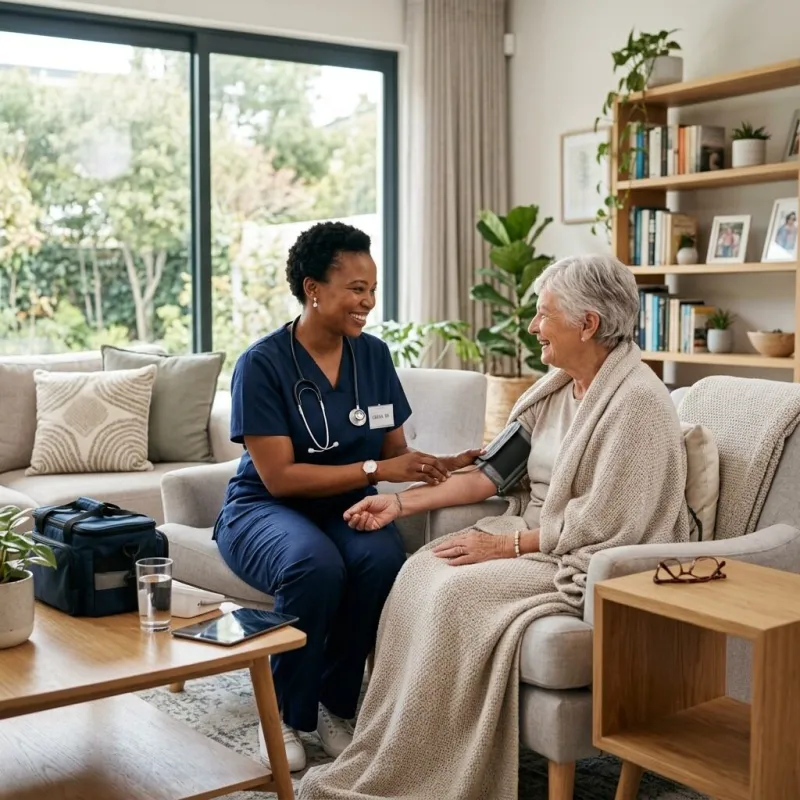
Healthy ageing refers to the ability to maintain the capabilities needed to carry out the activities a person values. It must be assessed in the context of a person’s individual circumstances, environment and the support available to them.
The WHO emphasises the great diversity of pathways in old age. People of the same age may have very different capabilities and needs. The social and environmental conditions experienced throughout life help to explain these differences.
This approach requires us to move beyond a perspective based solely on the number of years lived. The quality of care depends on its ability to take into account health, mobility, daily activities and individual preferences as a whole.
For the AMD, preparing for ageing at every stage of life is a key priority. Prevention and continuity of care must enable people to retain their ability to act, make choices and participate for as long as possible.
What barriers hinder access to care?
Access to care relies on a chain of conditions: recognising a need, finding the right point of contact, securing an appointment, reaching the service and continuing treatment. A breakdown at any of these stages can render a service inaccessible, even when it exists.
The financial aspect is crucial. In addition to consultation and medication costs, there may be expenses for travel or support. The WHO emphasises that universal health cover must address the needs of ageing populations and promote coordinated health and social services.
Clarity of the care pathway is equally important. A person must be able to understand the procedures, identify the relevant service and know who to contact as their situation changes. Any assessment of access must therefore focus on the actual use of services.
The AMD considers this effectiveness to be a key criterion of equity. Recognition of coverage remains insufficient when costs, distances or the complexity of procedures still prevent people from receiving the necessary care.
Why do inequalities accumulate over the course of a lifetime?
Health outcomes in old age bear the mark of one’s life course. Available resources, working conditions and opportunities for prevention all contribute to shaping different life trajectories.
The World Bank emphasises the value of an approach to longevity that combines health, education, nutrition and financial protection. It also notes that women, although they generally live longer, may experience longer periods of illness or disability with fewer resources to cope with them.
These findings call for a careful examination of disparities. National averages alone do not provide a sufficient understanding of the situation of people on low incomes, those living in remote areas, or those requiring regular support.
It is also important to document unmet needs. The research published in 2025 by the WHO Centre for Health Development on unmet needs for healthcare and social support covers several regions of the world. It helps to improve the monitoring of health coverage among ageing populations.
An equitable policy must be able to identify those whom services struggle to reach and understand the reasons for this situation.
How can health systems be adapted to an ageing population?

Adaptation involves developing person-centred care pathways, in which interventions are based on a consistent assessment of the individual’s needs. Coordination between professionals and services then becomes a prerequisite for quality.
The WHO handbook on integrated care for older people, in its second edition published in 2025, proposes care pathways to be adapted to local contexts. It focuses in particular on identifying declines in functional capacity, taking support needs into account and developing personalised care plans.
This approach places great emphasis on community-based care, the training of professionals and the sharing of information necessary for monitoring. It enables continuity to be ensured between a consultation, treatment and day-to-day support.
Prevention must also remain accessible to people of all ages. The WHO emphasises that lifelong health promotion can help reduce the risk of chronic diseases and functional limitations.
For the AMD, these adaptations must uphold the same principle: a person’s growing needs must not lead to fragmentation of their care or a reduction in their ability to participate in decision-making.
How can sustainable support be organised?
When needs become long-term, long-term care and assistance with daily living become essential components of support. Organising this support involves public services, professionals, families and communities.
The work of WHO Europe on investment in long-term care highlights its social and economic dimensions, as well as its implications for those receiving care and their families and friends.
The quality of this organisation depends on several factors: the services covered, their funding, the training of professionals, support for carers and respect for individual preferences. These aspects must be considered together to ensure the stability of the support provided.
The United Nations Decade of Healthy Ageing, covering the period 2021–2030, provides a common framework for improving living environments, integrated care and access to high-quality long-term care.
The World Development Association emphasises that the extra years gained must be lived with dignity, security and autonomy. The extent of progress in healthcare is therefore also measured by the ability of institutions to make its benefits accessible. Maintaining this ambition requires systems that support people over the long term and meet their needs without compromising their freedom of choice.
SAMYATH A. AMOUSSA