











Informal work and social protection: understanding inequalities in economic security
Informal work provides a livelihood for many people, whilst at the same time exposing them, in various situations, to insufficient protection against life’s uncertainties. This vulnerability is a key concern for the World Association for Development (AMD), which links decent work to the continuity of rights and security of livelihoods. The ability to earn an income today does not guarantee the ability to maintain one’s standard of living when illness, maternity, an accident or old age interrupts one’s work.
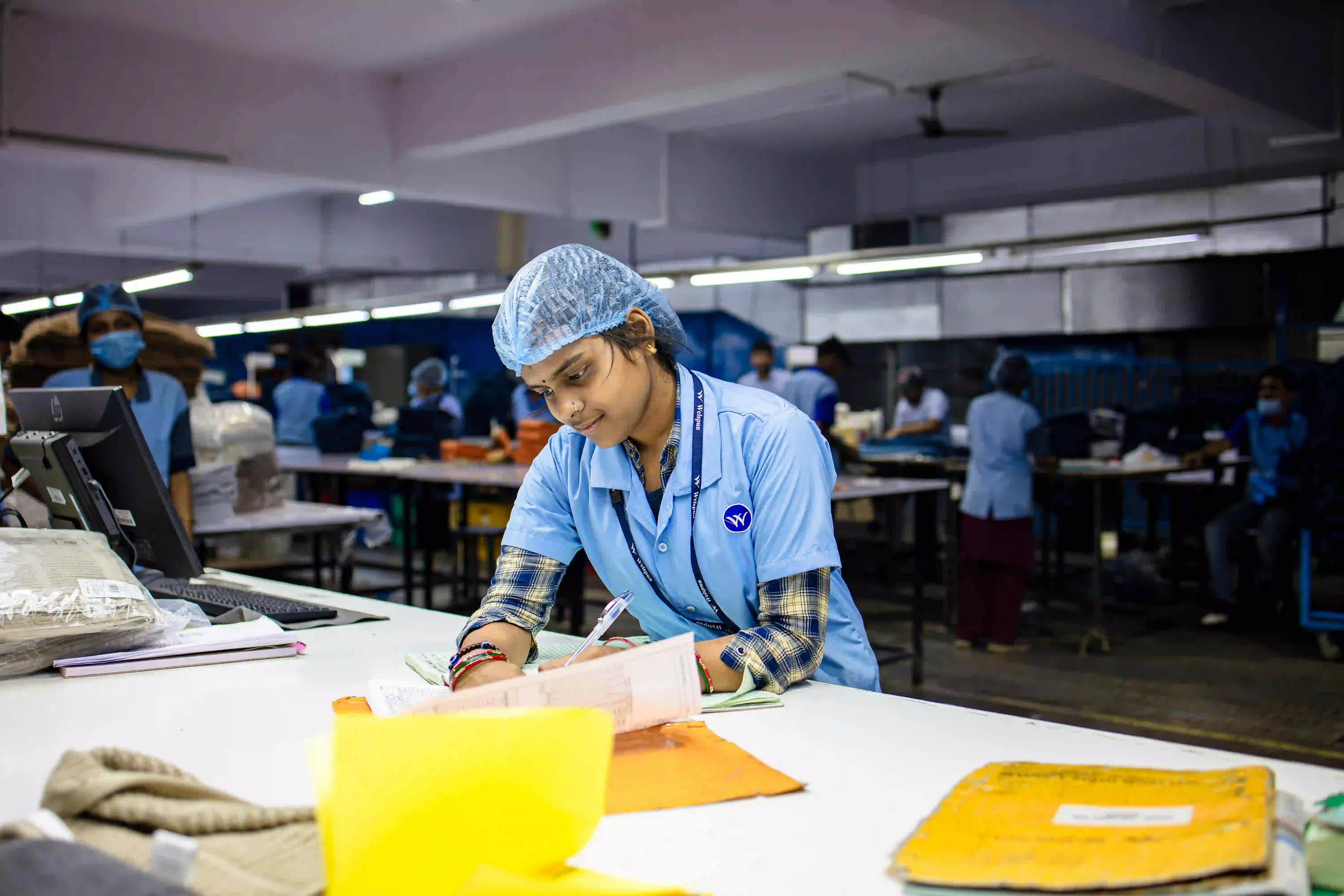
Informal work encompasses a wide range of realities. It includes agricultural, commercial, craft and domestic activities, as well as certain employment relationships within companies. It is found across all regions of the world and is not limited to any particular occupation or to small-scale self-employment alone.
Informality highlights a gap between work and protection
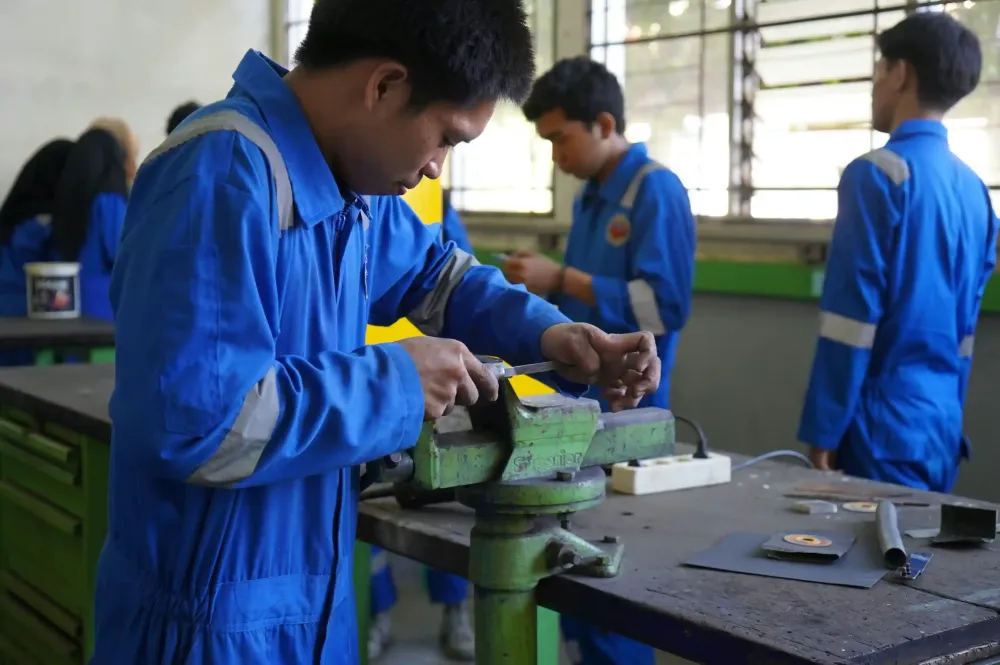
Work may be regular, recognised and economically valuable without being accompanied by adequate safeguards. The ILO links informal employment to a lack of coverage – in law or in practice – by certain formal provisions governing, in particular, labour and social security. The visible nature of the work therefore does not directly indicate the level of protection afforded to the person carrying it out.
This distinction allows us to move beyond a purely administrative interpretation. A worker may fall into a category that is theoretically covered but, in practice, face difficulties in registering for or accessing benefits. The recognition of a right and its effective exercise are two distinct stages.
However, informality does not necessarily imply a total lack of protection. Certain tax-funded schemes may benefit people regardless of their employment status. A person may thus have access to healthcare without receiving replacement income whilst they are unable to work.
The analysis therefore focuses on the extent of the benefits that are actually accessible. The nature of the benefits, the conditions for eligibility and their level determine the level of security provided. Partial cover may meet certain needs whilst leaving significant vulnerabilities unaddressed.
When time off work jeopardises a household’s financial stability
For someone paid on a daily basis or whose income depends directly on sales, a break from work can lead to an immediate drop in income. Day-to-day expenses, however, continue. Housing, food and children’s needs do not decrease at the same rate as income.
Illness can therefore create a double burden: reduced income and additional expenses. The household may dip into its savings, turn to friends and family for help, or take out a loan. If the situation drags on, the resources needed to return to work may themselves be eroded.
Motherhood and old age highlight other forms of vulnerability. Inadequate protection can make it difficult to take a break from work or force people to continue working even as their physical abilities decline. The lack of safeguards thus constrains people’s choices and their ability to navigate these life stages with dignity.
Economic security takes on a concrete meaning here: it refers to the ability to cope with a change in circumstances without suddenly losing one’s means of subsistence. This continuity is in line with the AMD’s approach, according to which decent work contributes to people’s autonomy and to the sustainable reduction of poverty.
Coverage is increasing, but safeguards remain uneven
The ILO’s World Social Protection Report 2024–2026 indicates that 52.4 per cent of the world’s population received at least one social protection benefit, according to the data compiled in this edition. This increase represents progress, but it does not mean that all those covered have comprehensive protection against various risks. [2]
A pension, a family allowance or another form of benefit addresses a specific need. It does not automatically indicate access to compensation in the event of illness, an accident or job loss. Social protection comprises several dimensions, the scope of which varies depending on the system.
Career paths also influence access to entitlements. A succession of short-term jobs, periods without contributions and changes in status can complicate the process of building up or maintaining these entitlements. Such career trajectories deviate from the model of continuous employment with a single employer.
International comparisons therefore become more accurate when they distinguish between the existence of a scheme, its actual use and the quality of benefits. This approach makes it possible to recognise progress without overlooking the disparities that remain between different categories of workers.
Domestic work highlights the difficulties in accessing entitlements
Domestic work reveals several characteristic obstacles. It may be carried out in different households, on a part-time basis or with variable working hours. These arrangements sometimes mean that registration and contribution procedures are ill-suited to the reality of the employment.
In its global study published in 2022, the ILO examines the legal, administrative and practical barriers that limit social protection for domestic workers. It highlights the gap that can exist between the coverage provided for in legislation and protection that is actually accessible. [3]
The experience of Uruguay, presented by the ILO, illustrates the value of registration procedures that take account of part-time work and multiple employers. Adapting procedures to the nature of the work helps to reduce certain barriers to enrolment.
Understanding the procedures is also a factor. The time required, the distance to services or the difficulty in gathering the necessary documents can hinder access. Protection thus has a practical administrative dimension: a right becomes more accessible when the procedures for exercising it correspond to the circumstances of the people concerned.
This example does not constitute a one-size-fits-all model. It illustrates how a seemingly technical difficulty can directly influence the security of a career path.
The effectiveness of formalisation is measured by its impact on living conditions
The transition to the formal economy combines recognition of work, labour protection, social security and compliance with applicable rules. Its scope extends beyond administrative registration when such registration effectively provides safeguards and opportunities.
ILO Recommendation No. 204, adopted in 2015, proposes an international framework to support this transition. This is a recommendation, not a convention subject to ratification. It links the reduction of informality to that of decent work deficits, whilst taking livelihoods into account.
For both workers and small businesses, the effects are evident in the ability to understand the procedures, afford the contributions and benefit from the corresponding protections. Irregular incomes and the diversity of employment statuses make this link particularly important.
Trust in the schemes also depends on how they operate: the availability of information, the continuity of entitlements and the processing of claims. Formalisation takes on social significance when its benefits become apparent in working and family life.
Social protection thus limits the risk of a life event turning into a lasting disruption. The World Association for Development embeds this security within a conception of progress that recognises people beyond their immediate capacity to generate an income. The contribution of work to development is realised to the full when rights and protections accompany people’s life journeys, including during periods of vulnerability.