

















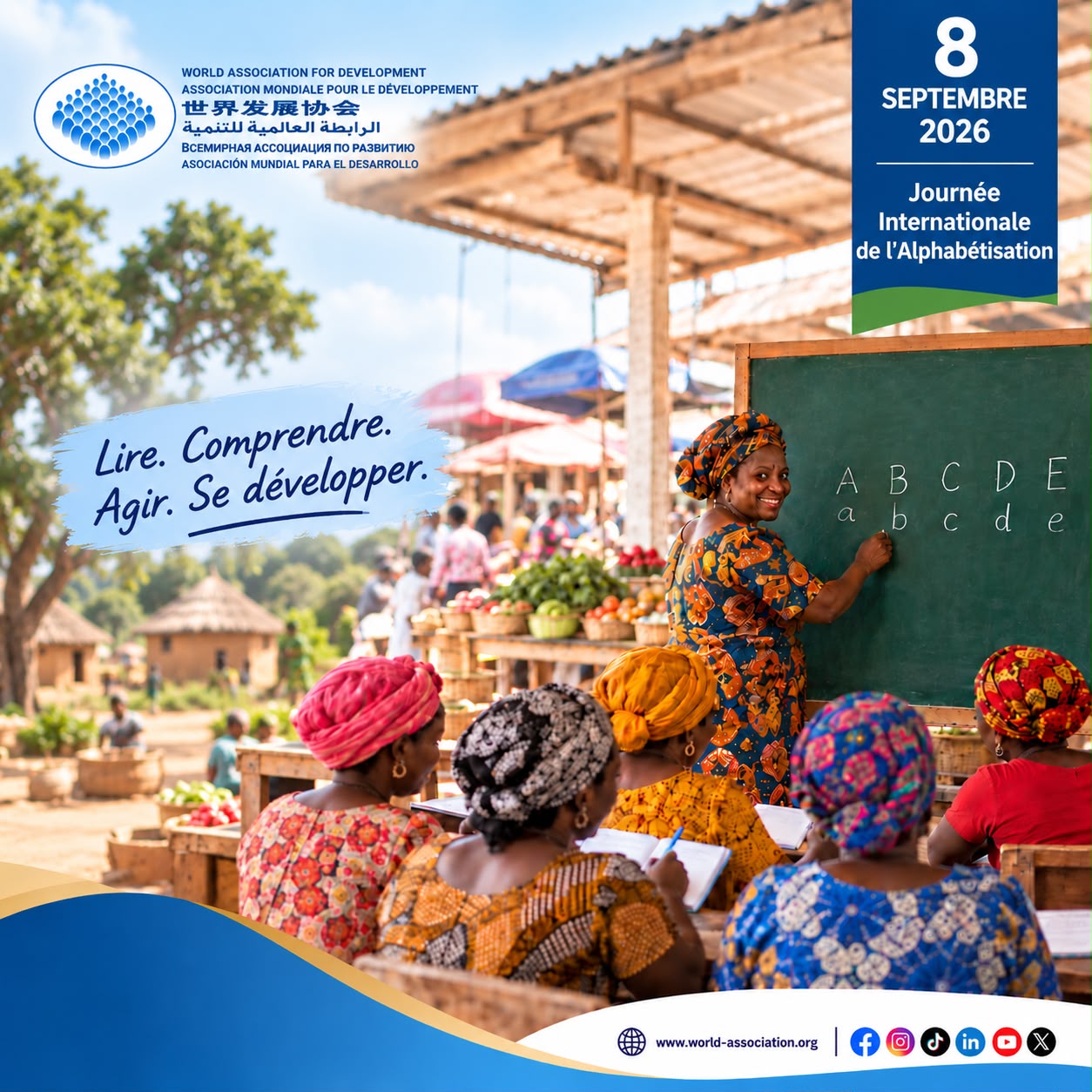
ILLITERACY: A MAJOR OBSTACLE THAT SLOWS DOWN THE DEVELOPMENT OF OUR SOCIETIES
In 2024, the global adult literacy rate stood at 88 per cent. However, at least 739 million adults still lacked basic reading and writing skills. Of these, around 466 million are women. More than 77 per cent of illiterate adults live in two major regions: nearly 347 million in Central and South Asia and around 225 million in sub-Saharan Africa.
These figures highlight the persistence of deep-rooted educational, social, geographical and gender-based inequalities. Illiteracy restricts access to employment, training, healthcare, financial services, public information and the effective exercise of rights. It also undermines parents’ ability to support their children’s education and perpetuates the intergenerational transmission of learning difficulties.
The accelerating pace of digital transformation is exacerbating this vulnerability. Understanding a paperless administrative procedure, using a mobile banking service or accessing information online requires the ability to read, comprehend and exercise judgement. People lacking these skills are therefore at risk of suffering double exclusion: educational and digital.
To mark the sixtieth anniversary of UNESCO’s proclamation of International Literacy Day, the World Development Association calls on institutions, local authorities, civil society organisations, the private sector, the media and development partners to make literacy a core and enduring priority.
Promoting literacy means empowering people, strengthening human capital and paving the way for more inclusive, resilient and prosperous societies.
Read. Understand. Act. Grow.
#ReadUnderstandAct